
© 2026. Randolph Hub. All Rights Reserved.
Welcome!
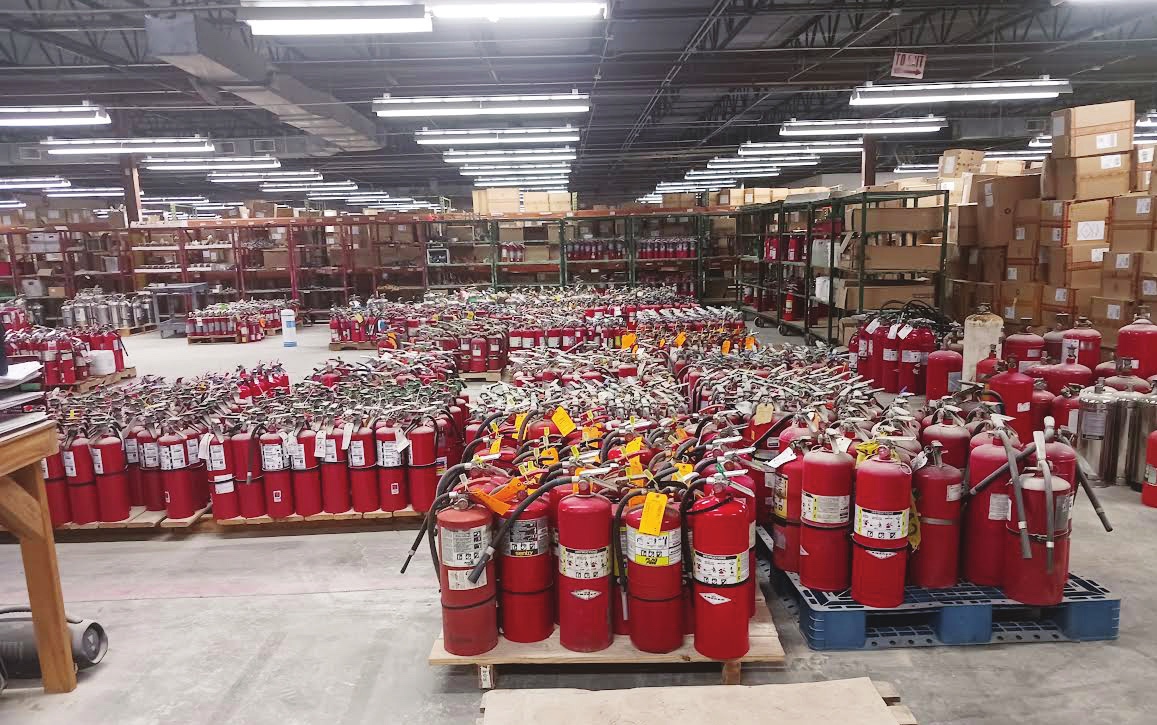
Pallets of fire extinguishers at Redline Hydro & Recharge await recharging. Used fire extinguishers are taken apart, cleaned, tested, recharged and returned to customers. (Photos: Larry Penkava / Randolph Hub)
Redline is growing and wants to be even bigger
ASHEBORO — Jeremy Southard and Jeremiah Mallow wanted to start a business to provide jobs. So when Klaussner Home Furnishings closed in 2023, they saw their opportunity.
The two weren’t satisfied with just one business, turning 60,000 square feet of the former Klaussner Plant 7 into Redline Hydro & Recharge and Redline Warehouse Supply Chain Solutions. It’s been two years of growth but they still aren’t satisfied. “I would love to occupy this entire campus,” Southard said of the former Klaussner property.
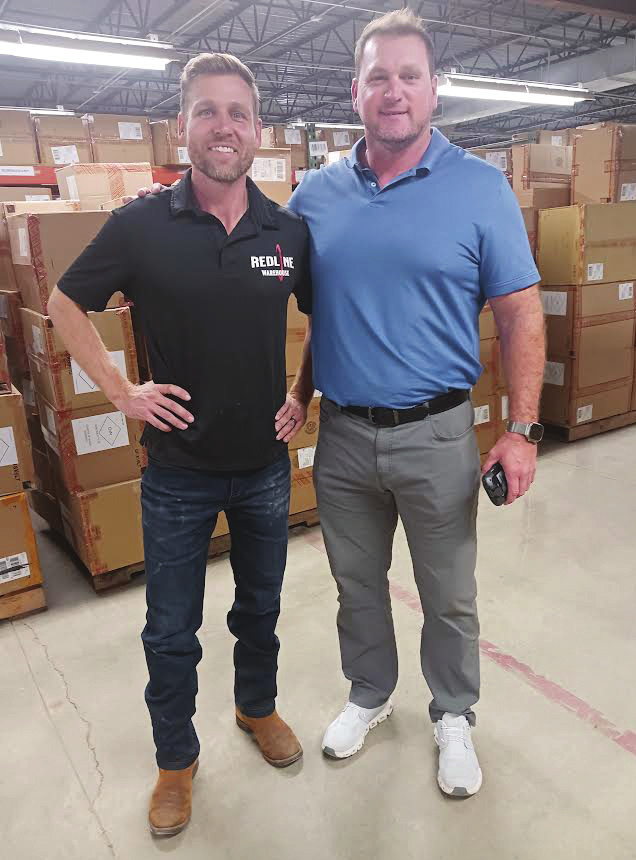
In the meantime, he and Mallow hope to expand up to 200,000 square feet by the first quarter of 2027. That doesn’t seem out of the question since their current space is filled with pallets of goods ready for delivery.
Southard and Mallow met while working for a Piedmont Triad business. “We started working together in 2008,” Southard said. “We wanted to provide job opportunities for people and help them grow.”
Mallow said that when Klaussner shut down, they decided they “wanted to start something in Asheboro (where Southard is from). I had a hand in the fire business and we saw the opportunity to start Hydro.”
He explained that companies that sell and supply fire extinguishers don’t always want to service the devices, preferring to outsource.
Redline Hydro & Recharge brings used extinguishers back to the plant to take them apart, clean, test and then recharge them before trucking them back. They service customers from Virginia to Georgia with plans to widen their area.
Redline Hydro currently has five fulltime employees and during peak periods can have from 7 to 10 workers.
Redline Warehouse Supply Chain Solutions has been built on Southard and Mallow’s combined 40 years of experience in supply chain operations. It’s often called third-party logistics, which Wikipedia defines thusly: “A company that supplies and/or coordinates logistics functions across multiple links in a supply chain. The company acts as an intermediary between a seller or manufacturer (the first party) and a buyer or user (the second party).”
The most familiar company in logistics is Amazon.
While the owners of Redline have no vision of surpassing Amazon, their goal is to “provide job opportunities, not just to warehouse,” Southard said. “I think there could be as many employees as Ross (Stores distribution center on US 311 which has plans to employ 800).”
Southard and Mallow said outsourcing of inventories isn’t confined to small businesses but that many name brands depend on third parties to manage their products. Their largest customer is based in Los Angeles and deals in footwear and apparel.
Mallow said a customer will send an inventory of products to Redline for warehousing. When ready for shipping, the customer will provide a list of kits (products to be shipped together) and trucked to the preferred location.
Redline Warehouse now has 30 employees but the plan is to increase to 100 by the end of next year.
“It’s a lot more difficult to get employees in today’s world,” Mallow said. “Our goal is to help them develop into leaders in a good work environment and add value to be successful.”
Southard said, “We’re blessed to have started from scratch. We did not buy a business but built it from the ground up with our own investment.”
As a third-party provider, Redline manages each customer’s inventory and helps solve their problems. Inventory control involves proper labeling of products, using barcodes that show what the product is, the quantity and the destination. Workers use hand-held electronic devices to scan the labels.
Behind it all is offering good jobs, Southard empathized. “We want people to make a reasonable living wage and help increase the median income of the community.”
Where ‘Redline’ came from
Southard explains how the name Redline came to be:
“The name Redline brings together our roots in fire protection and our approach to business. The ‘thin red line’ represents the courage and service of firefighters, connecting to the work we do at Redline Hydro and Recharge.
“It also draws on the idea of redlining an engine … giving it everything you’ve got. Together, those meanings reflect the hard work, dedication, and commitment to customers that carry across both Redline Hydro and Recharge and Redline Warehouse Supply Chain Solutions.”