
© 2026. Randolph Hub. All Rights Reserved.
Welcome!
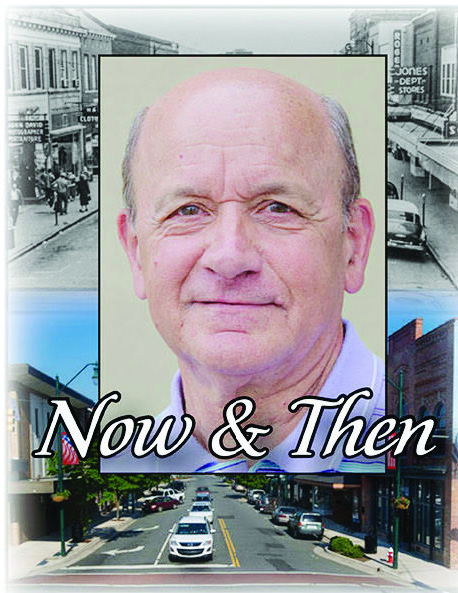
Now & Then: A history lesson about 'ancient" times
Advanced Placement (AP) United States History 1945-1980 — Cold War, civil rights, social change
———
Alright class, put up your cell phones. Today we’re going to delve into what you would consider ancient history.
After all, it was long ago, during the 20th century no less.
Rather than talk about wars and politics and social change, I want to focus on how people survived before the invention of modern processes. You know, like wifi and streaming.
First of all, there was a time when there were no ATMs or hubs for debit and credit cards. So, how did folks get money or pay for goods at Walmart?
Back in the day, people would carry money in their wallets or purses and pay cash at the checkout. When they were short of cash, they would have strips of paper called checks, write the name of the business at the top, put down the amount and then sign it. The check would then be sent to the person’s bank, which would forward the money to the business.
Yeah, I know. It sounds drawn out but it’s all they had.
———
Have you ever wondered how people got around before GPS was invented? Well, they used these primitive paper diagrams called roadmaps.
Before they could start on a road trip, the driver would have to figure out on the map the best route, mark it with a pen and have a passenger tell when to make a turn.
The worst part about roadmaps was having to refold them after use. That could be a bear.
———
Speaking of road trips, there was a time when vehicles didn’t have cruise control. Drivers had to keep their right foot on the accelerator and their eyes on the speedometer to avoid getting caught for speeding.
———
Now I know you’ve all watched movies and videos streaming on your 50-inch TVs and on your cell phones. You likely think DVDs are old-school but before them there was something called a VHS video tape. It went into a video player and the tape ran through to produce the picture on the TV.
Going back even further, there was what was called a movie projector that ran film on a reel in front of a light that projected the pictures on a screen.
———
Can you imagine a world without cable or satellite TV? Well, there was such a time.
The only way to watch TV was from signals sent from a local TV tower. People used what were called antennas mounted high up on the roof of the house to catch the signal and send it by a cord to the television inside. They had to adjust the antenna so that it was pointed directly toward where the station was located.
Unfortunately, unless you lived in a large city with multiple TV stations, you were forced to choose among just three or four channels. But that meant a national TV show could pull in up to half the available viewers.
———
You guys will find this hard to believe but there was a time of no internet, no Google, no Wikipedia. So how were students like you able to do research for school projects?
Can you say encyclopedia? It consisted of 15 or 20 volumes of essays on the knowledge of the age, from A to Z. If you had to write a science paper on Apple, you would find the section in the A volume. But, of course, there was no Apple back then.
———
Now, look at your cell phone. You can talk, text, take photos, look up Apple, and multiple other actions. There was a time when cell phones didn’t exist.
Yeah, I see it on your faces — the abject incredulity, the perplexity, the quandary. But, believe it or not, there was such a time, not so long ago.
It was as near as the 1950s when telephones were big bulky black boxes with a two-sided receiver placed on top. When a call came in, the person would pick up the receiver, place one end to the ear to hear the caller and the other to the mouth to talk back.
In order to call someone else, there was a round dial on the front of the telephone with numbers from 1 to 0. You would pick up the receiver and then dial the number by placing your finger in the number holes and moving the dial clockwise to a stop. After dialing all the numbers, then the person being called would hear a ring and answer.
When you were away from home and needed to call someone, you looked for a pay phone. We’ll talk more about that next time.
Class dismissed. But remember, never take your devices for granted.
Larry Penkava is a writer for Randolph Hub.
Contact: 336-302-2189, larrypenkava@gmail.com.