
© 2026. Randolph Hub. All Rights Reserved.
Welcome!
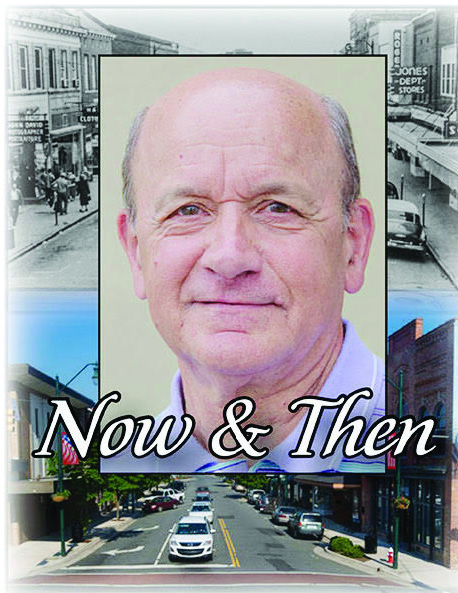
Now & Then: Larry remembers the rural stores, now mostly replaced by Dollar General
In today’s world of retail, there’s nothing more common than Dollar General.
I’ve heard that DG’s corporate’s goal is to have a Dollar General every seven miles. But it’s my untrained observation that the goal has been exceeded, with a store more like every couple of miles.
Dollar Generals are everywhere, even in rural areas. Which begs the question: How did people living in the boonies survive before DGs?
Well, we did survive back in the 1950s and ’60s, before Dollar General was even a gleam in some CEO’s eyes, because what we called country stores had sprung up even in the most remote areas.
A typical country store had what most rural families needed in a pinch. If Mama wanted something quick for supper but didn’t have the time to drive to the supermarket in town, she could send Junior with a couple of bucks to Jethro’s Grocery down the dirt road to pick up a pound of ground beef, some hamburger buns and a big can of beans.
Now Daddy would have something to stick to his ribs when he came in from working all day in the fields.
My mother grew up on a dairy farm and the house had a cellar that doubled as a country store. The large folding storm doors served as the entrance for hunters looking for a snack.
When I was growing up, my family lived on what’s now Andrew Hunter Road, just a quarter mile from Highway 64. Back then, we just called it the Franklinville road.
Within a half mile from our house was Martin’s Store and a little farther along was Kinney’s Store. Up on the highway, maybe a mile or so, were Routh’s and Carter’s stores.
But we didn’t have to go that far to a country store. Mama would do her serious grocery shopping about six miles away in the big town where she compared prices at A&P, Big Bear and Colonial Store.
But nearby, there was Trotter’s Store, just up near the highway. Walter and Isabel Trotter had six kids and their two youngest were boys about the same ages as my two older brothers. That meant we spent lots of time with them playing sports or exploring in the woods.
The Trotters built the store to augment Walter’s income as a supervisor at a hosiery mill in town. That meant Isabel ran the store, sitting behind the counter, ruling from her throne of a stool.
The cinderblock building had several aisles of merchandise. Some featured bread and cookies, another had canned goods and still another offered snacks and chips. At the rear was a meat counter and some produce.
But my favorite part of Trotter’s Store was at the front across the front door from the counter. It was a big red box with folding lids on top. The inside was filled with icy water chilling a wide variety of soft drink bottles.
Besides Coke and Pepsi, there was RC Cola, 7Up, Upper 10, Nehi orange and grape, Sundrop, Mountain Dew and Dr. Pepper. There was ginger ale, root beer and even a chocolate drink.
After drawing back one of the lids, I would survey the bottle caps trying to decide which fizzy pop would quench my thirst. After making my selection, I would reach into the frigid water, pull out the dripping bottle and use the opener on the side of the box to lift off the cap. I’d hear the hissing of the carbonation escaping, then raise the bottle to my lips for that first big swig.
Now that was worth the hard-earned nickel.
What really upset us was when word arrived that Coke was raising the price of their six-ounce bottle to six cents. But that’s OK, we reasoned. We could still get a 12-ounce Pepsi for five cents.
Eventually, the Trotters built a Dairy King next door, followed by a service station where you could get gas or change your oil. We called the area Trotter’s Corner.
Today, the only thing left of Trotter’s Corner is the store building, in which a number of ventures have been attempted over the years. None, in my view, provided that same neighborhood country store feel.
It’s a definite thing of the past, Dollar General notwithstanding.
Larry Penkava is a writer for Randolph Hub.
Contact: 336-302-2189, larrypenkava@gmail.com.