
© 2026. Randolph Hub. All Rights Reserved.
Welcome!
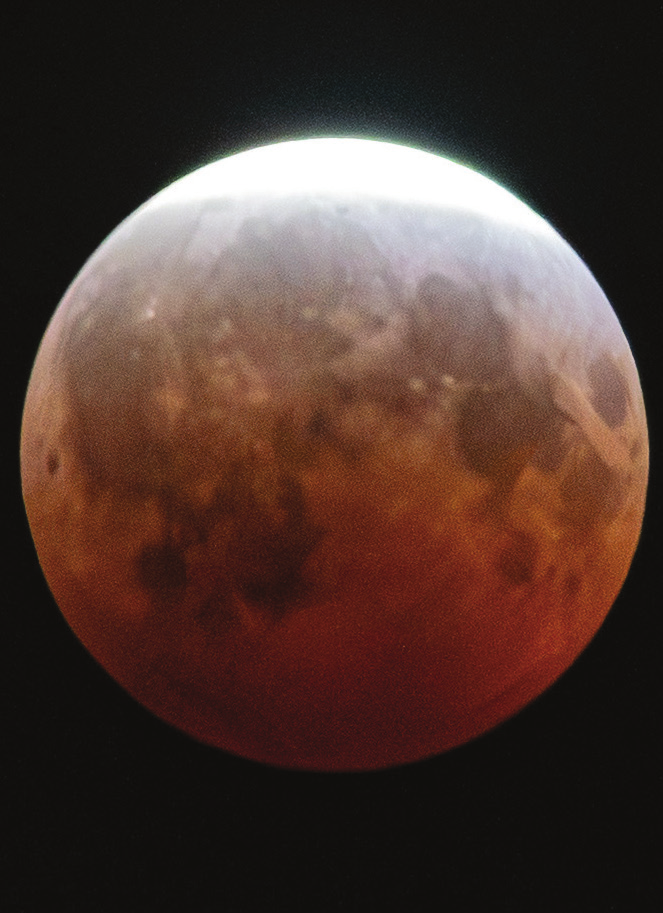
Cloud cover on the night of Aug. 27, 2026 broke free long enough for sky watchers to get a good glimpse of a lunar eclipse. (Photo: Scott Pelkey / Acme News)
Lunar eclipse breaks through just in time
ASHEBORO — Central North Carolina wasn’t expected to see much of Thursday night’s partial lunar eclipse. Forecasters with the National Weather Service had called for 60-70% cloud cover throughout the night across the Piedmont. But around 11 p.m., social media exploded with photos as large parts of the Piedmont got a break in the clouds just long enough for sky watchers to enjoy the show.
A lunar eclipse happens when the earth passes directly between the sun and the moon, blocking sunlight from reaching the moon’s surface and casting Earth’s shadow onto the moons surface. In a partial lunar eclipse, only part of the Moon is covered by the umbra — the darker part of Earth’s shadow — while the rest of the Moon stays in the lighter outer shadow, called the penumbra.
Thursday night’s eclipse was what’s known as a deep partial lunar eclipse, with 96% of the moon’s surface covered by Earth’s shadow — just short of a total lunar eclipse, when the entire moon is covered.
If you missed Thursday’s eclipse, you’ll be waiting a while for the next one as spectacular. While central North Carolina will see a partial lunar and a partial solar eclipse in January 2028, both will be minor, covering only about 2.5% and 5% of the moon and sun, respectively. The majority of the US won’t see a total lunar eclipse until June 26, 2029, according to the website Time and Date.