
© 2026. Randolph Hub. All Rights Reserved.
Welcome!
(Photo provided by North Carolina Zoo)
N.C. Zoo Unveils Highway Historical Marker Honoring Ham the Astrochimp
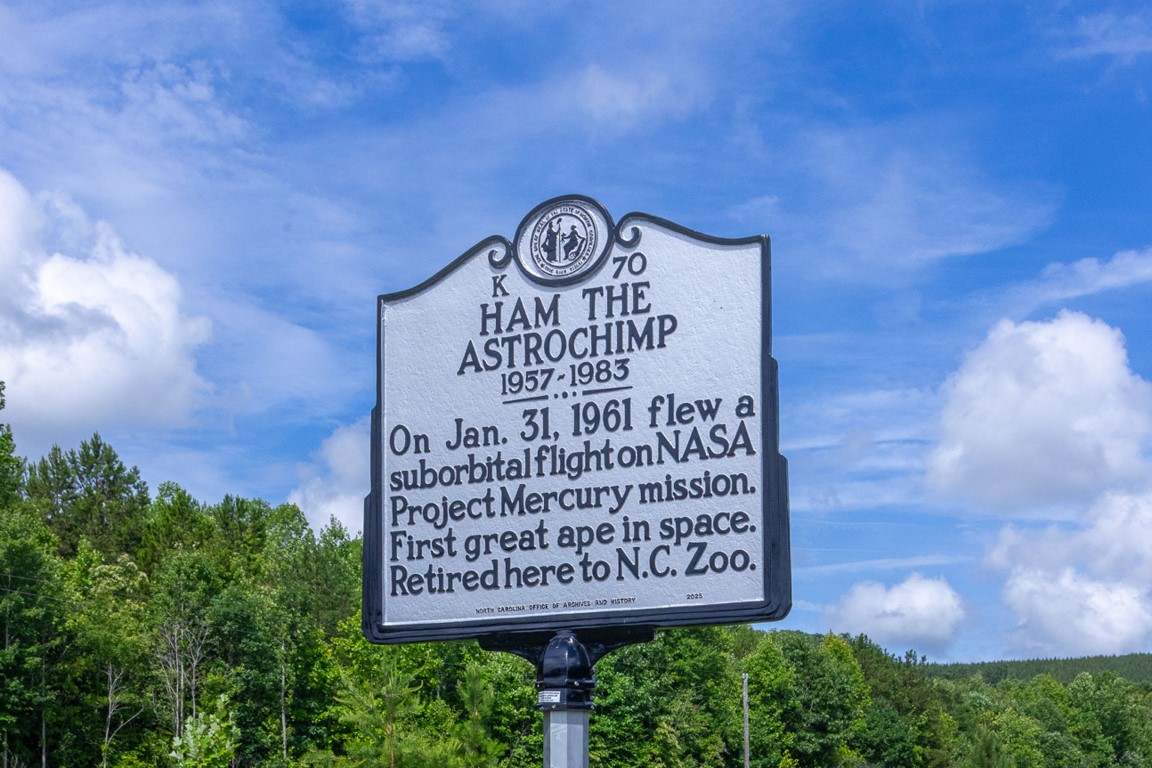
ASHEBORO, N.C. (ACME NEWS) — Earlier this month, the North Carolina Zoo dedicated a state highway historical marker honoring Ham, the chimpanzee who became the first hominid launched into space and later lived his final years at the N.C. Zoo.
The marker, approved through the N.C. Highway Historical Marker Program, now stands at the roundabout where Zoo Connector (N.C. 159) meets Zoo Parkway, near the zoo’s entrance — a spot zoo officials said will introduce Ham’s story to every visitor who drives in.
“We’re gathered here today — appropriately enough on World Chimpanzee Day — to honor a story that you might have a different connection to, depending on who you are or depending on where you work,” said Rich Bergel, one of the zoo’s deputy directors, who opened the dedication ceremony on July 14th standing in front of the chimp habitat at the Zoo. “In the history books, this might be kind of a footnote to the space race, to NASA engineers. It might be a few data points in an old flight log. But for us at the North Carolina Zoo, it’s a very personal connection to an animal who lived an extraordinary life.”
Leslie Leonard, administrator of the N.C. Highway Historical Marker Program, told the crowd the marker program program has operated jointly with the state Department of Transportation since it was created in 1935. North Carolina now has 1,669 markers statewide, with at least one in every county, she said.
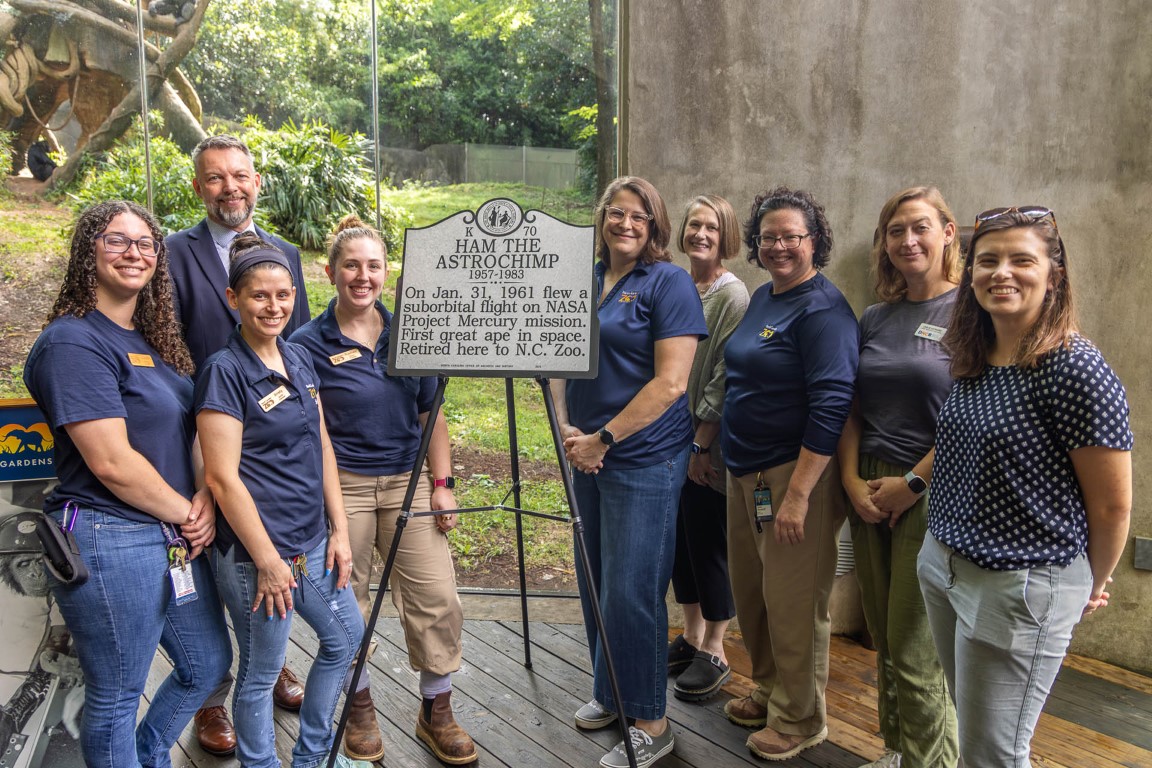
Leonard said a Historical Marker Advisory Committee — 10 history professors from colleges and universities across the state — meets twice a year to weigh applications against a standard of statewide, rather than local, historical significance.
“It is a very high bar to pass,” Leonard said. “Our markers are handmade, substantial, and expected to last for many generations.” She added that staff sometimes refer to the markers, only a couple of sentences long, as “history tweets” or “history haiku.”
From Cameroon to Cape Canaveral
Ham was born in July 1957 in what was then French Cameroon and was still an infant when he was captured and brought to a Miami animal farm. The Air Force purchased him in 1959 for $457 and sent him to Holloman Air Force Base in New Mexico, where he trained for 18 months under the designation “No. 65” — a number used, rather than a name, so a mission failure wouldn’t generate sympathetic press about a named animal’s death.
Ham’s eventual name became the acronym by which he’s known: Holloman Aerospace Medical Center, the lab that prepared him for flight.
On Jan. 31, 1961, Ham launched aboard a Mercury-Redstone rocket from Cape Canaveral, Florida, on a suborbital flight that lasted roughly 16 and a half minutes. A valve malfunction during the flight triggered the emergency escape rocket, subjecting Ham to 17 g’s of force — 17 times Earth’s gravity — followed by about six and a half minutes of weightlessness and a rough 14.7-g reentry after a retro rocket pack jettisoned early. He splashed down off course in the Atlantic and was recovered by the USS Donner, dehydrated and with a small abrasion on his nose but otherwise healthy.
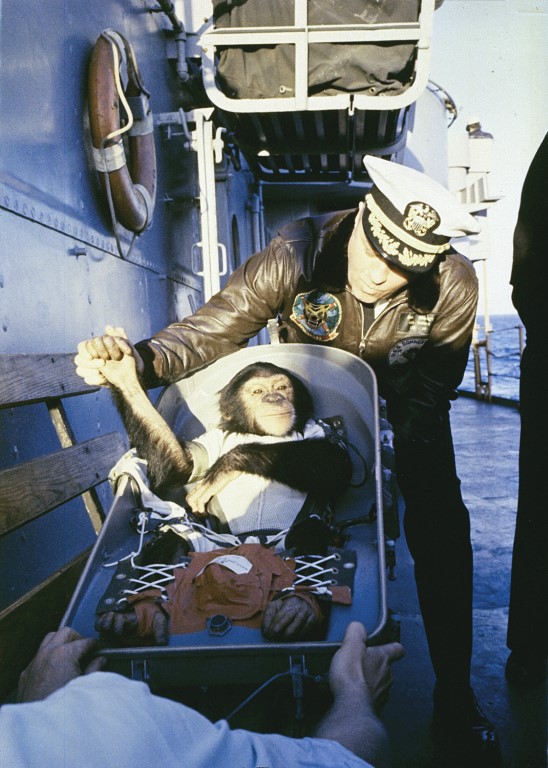
Despite the chaos, Ham completed the lever-pulling tasks he’d been trained to perform only fractions of a second slower than he had on the ground, proving a primate could still function under the stresses of spaceflight. Those results gave NASA the confidence to send astronaut Alan Shepard into space aboard Freedom 7 a little more than three months later, on May 5, 1961 — a flight that set the stage for the Mercury and Apollo programs that followed.
“Ham’s flight opened the door for this and everything else that followed: the rest of the Mercury program, the Apollo missions, and ultimately the first human footprints on the Moon,” Bergel said Tuesday.
Seventeen years at the National Zoo, then Asheboro
After his flight, Ham briefly continued in lesser Air Force aeronautical programs before being retired to the National Zoo in Washington, D.C., in 1963, where he lived alone among chimpanzees — interacting with keepers and the public, but never another member of his own species — for 17 years.
By the late 1970s, the National Zoo was searching for a home where Ham could finally socialize with other chimps. Jen Ireland, the North Carolina Zoo’s curator of mammals, said the search led to Asheboro, where the zoo’s new, spacious habitat and management team impressed the National Zoo’s director enough that he told the Air Force’s commanding officer it offered Ham “the best opportunity to become a socially integrated chimpanzee” of any facility he’d visited.
Ham arrived at the North Carolina Zoo on Sept. 25, 1980, and spent a month settling in before joining a troop of six younger chimps, all between 6 and 11 years old and, like Ham, wild-born and human-raised. A female named Maggie was the first to meet him and became his closest companion; as the group’s oldest member and only adult male, Ireland said Ham was likely the troop’s alpha.
“While his time at the North Carolina Zoo was short, it was the only time in his life that he had the opportunity to be a chimpanzee,” Ireland said.
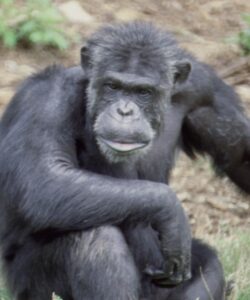
Ham’s keepers found him acting normally on the morning of Jan. 17, 1983; that afternoon, they discovered he had died. A necropsy on the 26-year-old chimp found chronic liver and heart disease. His skeleton is preserved at the National Museum of Health and Medicine in Silver Spring, Maryland, and his remains are buried beneath a bronze plaque at the International Space Hall of Fame in Alamogordo, New Mexico.
More information on the marker is available through the N.C. Highway Historical Marker Program’s blog.