
© 2026. Randolph Hub. All Rights Reserved.
Welcome!
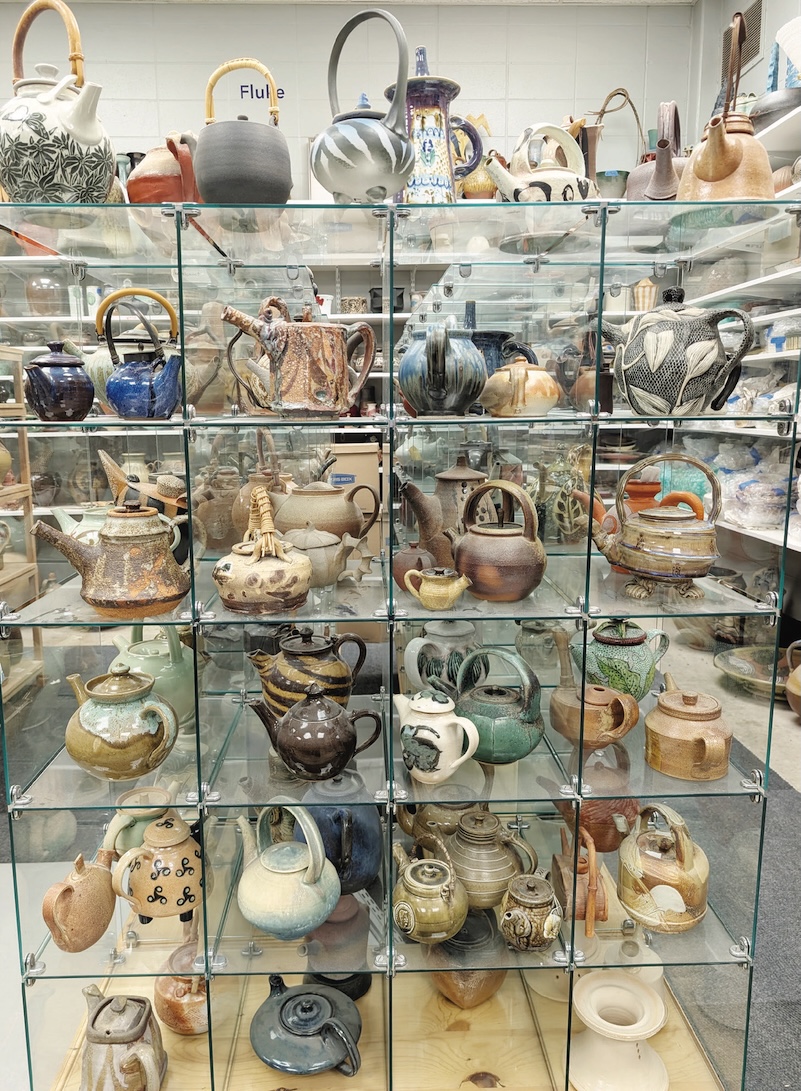
ECU students learn about ceramic teapots donated by the late Dwight Holland of Asheboro before making their own in a wheel throwing class. The university has more than 3,000 pieces of pottery donated by Holland, who died in 2019.
Dwight Holland pieces help shape artists’ work at ECU
From Jessica VanderKolk
ECU Public Communications Specialist
GREENVILLE, NC — Before creating their own teapots this semester, students in an East Carolina University wheel throwing ceramics class spent time browsing the School of Art and Design’s own unique special collection, nestled carefully in room 114 of Jenkins Fine Arts Center.
The Dwight M. Holland Ceramics Classroom holds thousands of teapots, jars, platters, and other ceramic and pottery pieces that Holland began donating to the School of Art and Design (SOAD) in 1998. The classroom was officially named and opened in 2018 and, after Holland died in 2019, associate professor Jim Tisnado said the SOAD picked up three truckloads of additional ceramics pieces from Holland’s house.
“We did that twice,” Tisnado said. “It’s still in boxes, some of it. I would easily say there’s more than 3,000, 3,500 pieces now.”
Add to that other donations — including work from artist and ECU alumna Dina Wilde-Ramsing, who died in 2023 — and the SOAD offers a unique, hands-on collection to educate and motivate students in their own art.
“(Holland) wanted his pots to have that legacy,” Tisnado said. “He was an educator.”
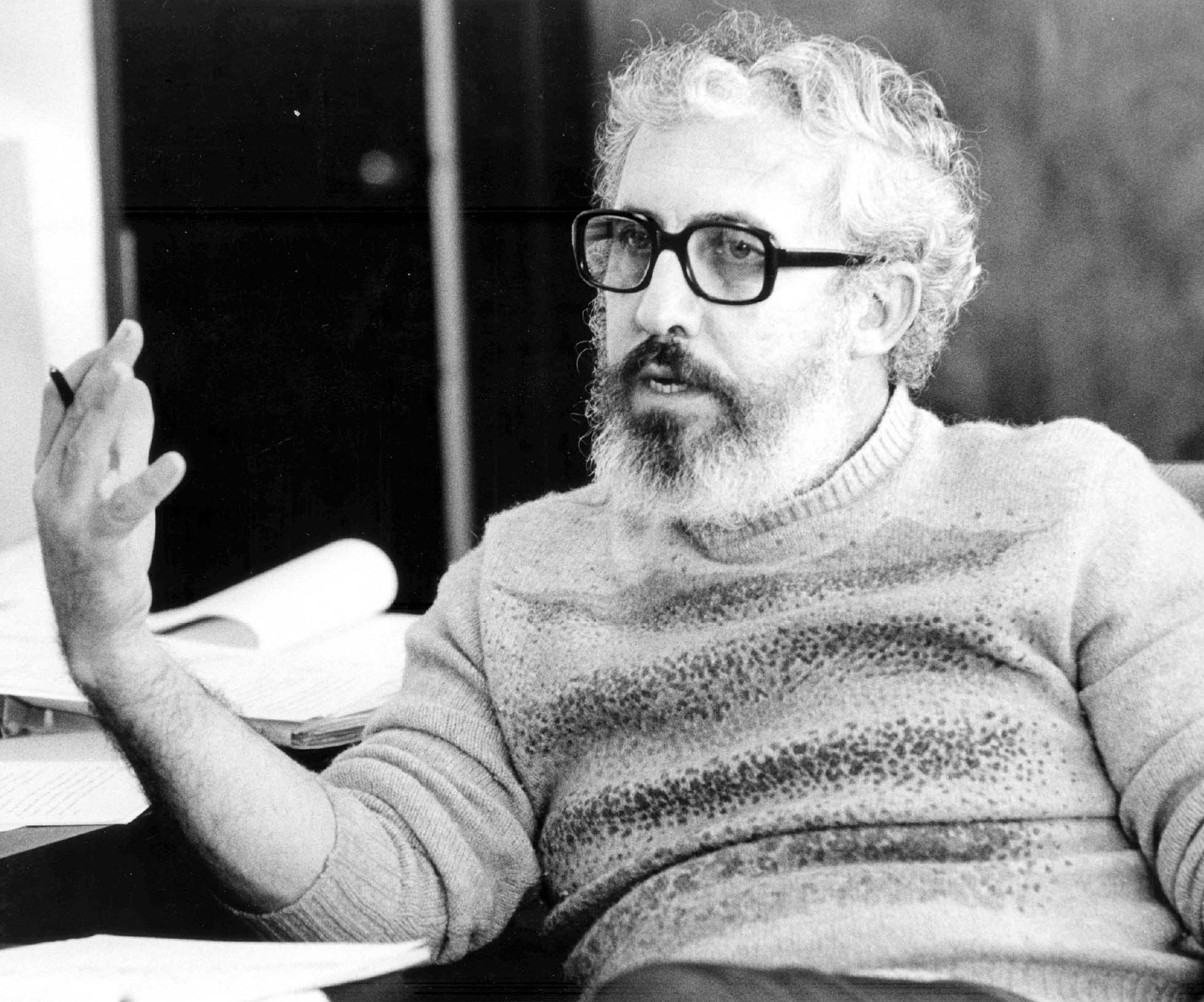
Holland taught art in Asheboro and spent much of his time in pottery and other art organizations and pursuits. He was unique in wanting students to pick up and handle the pieces. Tisnado and teaching assistant professor Andy Shaw said this distinguishes ECU’s from other collections and provides students with lessons outside of their art.
Shaw said students sometimes have a “casualness” with objects, making special their opportunity to engage with the Holland collection, which contains some museum-quality pieces.
“That’s part of what we’re trying to do, is to teach them how to revere these things,” Tisnado said. “You are lucky enough to be able to hold these precious objects. So this is really a special thing. They do love it; they’re starting to get it.”
After spending time perusing the collection this semester, Shaw’s wheel throwing students shared and critiqued each other’s progressive sets of teapots on a November day, sharing their successes and struggles, and offering their thoughts and ideas.
“I think maybe I should put less pressure on myself to make it perfect,” said Eliza Norman, a first-year transfer student working on her Bachelor of Fine Arts in ceramics. Shaw replied that many art students have to work through the idea that their pieces should look machine made.
Norman and others in the class created teapots for a short exhibition earlier in November, only the second to showcase Holland’s collection since its donation. Called “Dear Dwight,” it was an ode not only to pieces from the collection and student-created art, but also to the letters artists wrote to Holland to accompany the pieces he collected.
Shaw started an ECU Ceramics Instagram account to document the ceramics program exhibitions, student artsits, sales and adventures, increasing connections with their work. Shaw tags artists in his posts, which he did recently during “Dear Dwight,” and which always receive positive engagement.
“Many commenters are potters with work in the collection or who knew Dwight,” he said. “When I see comments like these, the social media posts are connecting and reaching audiences.”
For those who missed “Dear Dwight,” they will likely have the chance again to see Holland collection pieces on display. The SOAD is optimistic that they will offer similar shows in the future. Shaw and Tisnado said there are enough pieces in the collection to offer a new theme each time.
Norman’s “Dear Dwight” teapot was the second she’s made, and she called the green and brown pot “a little tank.” Thanks to the green glaze not sticking well, the look became unintentionally rustic. Norman said her more recent teapots have a better balance between the spout, lid and handle, and took inspiration from multiple Holland collection pieces.
“I spent a lot of time just browsing the shelves, not even looking at just teapots, looking at jars and all sorts of stuff, trying to get ideas for shapes,” Norman said.
Like clothes, water bottles and internet memes, ceramics has a trendy piece every decade or so. Teapots were the “it” piece in the early 1990s. Because many of the pieces in Holland’s collection span the last 30 years, ECU is now home to many teapots. For the teapot assignment that is almost always on the throwing class syllabus, that gives students an important educational tool.
“Artists in 2025 often take on the entire burden of being creative without acknowledging what has come before or what artists are making now,” Shaw said. “We use the collection as a teaching resource so we can show examples of how potters create a foot or add a handle on a teapot. The pots are all so different; just by looking and studying these pots, you can find yourself. Looking is essential to creative practice.”