
© 2026. Randolph Hub. All Rights Reserved.
Welcome!
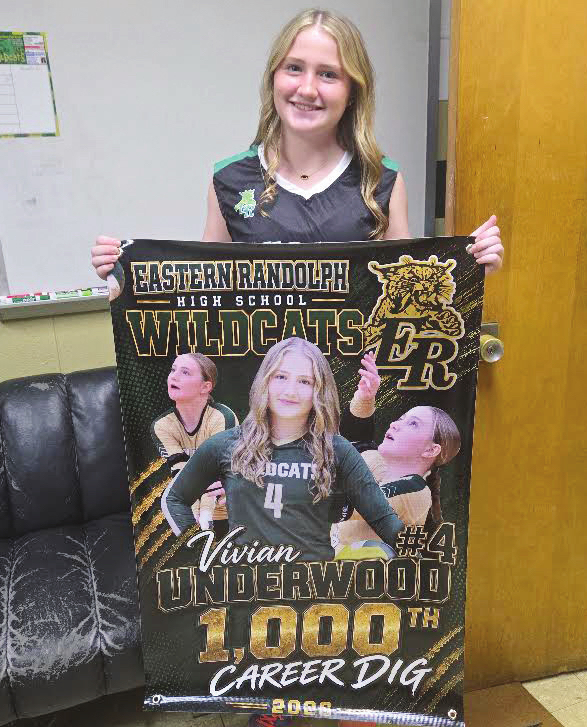
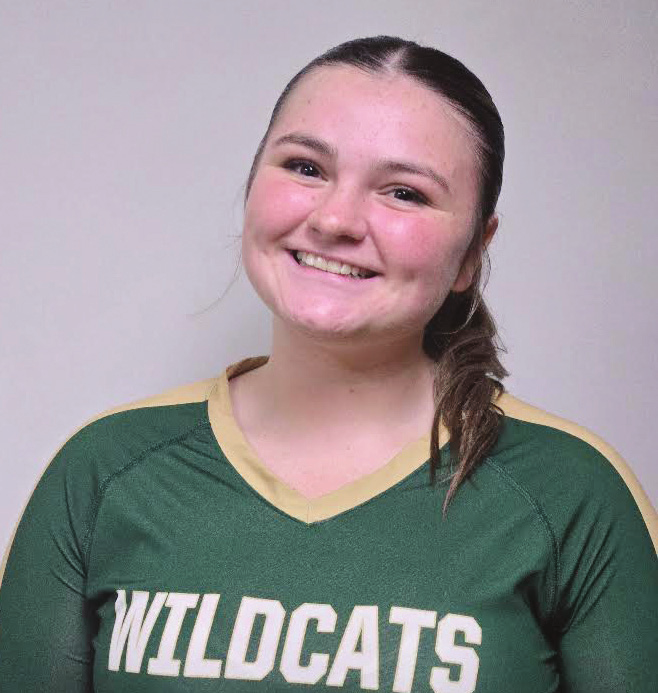
Vivian Underwood’s determination has helped her put together a memorable volleyball career at Eastern Randolph despite a mysterious condition that could lead to her losing consciousness at any moment. (Photo: Dennis Garcia / Randolph Hub)
ER junior marches on in volleyball career despite mysterious condition
RAMSEUR — Courage and inspiration.
They can be seen in so many shapes and sizes. They can be seen in a 350-pound offensive lineman who has battled injury after injury, but despite knowing he should hang up his helmet for the final time, still battles on the gridiron for the love of the sport and the love of his teammates.
They can be seen in a firefighter or service person who is taught to run toward danger while everyone else runs the other way.
They can be found in every person who has ever served or is currently serving in the military.
Courage and inspiration also can be found in the form of a petite junior volleyball player at Eastern Randolph High School, who for nearly a year has been battling an unknown disease, a disease that causes her to literally pass out at any time, at any place, while she’s doing anything, with that particular episode lasting for minutes.
Vivian Underwood, her parents, relatives, friends and family are still not 100 percent sure what she has been inflicted with, but after numerous appointments, tests, doctor visits and mediations from authorities at Brenner Children’s Hospital in Winston-Salem, Duke University Hospital and local physicians, the cause may finally be known.
What was once and still officially is an unknown condition may indeed be Postural Orthostatic Tachycardia Syndrome (POTS), a disorder of the autonomic nervous system characterized by an abnormal increase in heart rate while transitioning from something as simple as standing up after lying down.
Excessive heat accelerates the condition, which could lead to dizziness, lightheadedness, fatigue and loss of consciousness.
Underwood has an appointment scheduled at Levine’s Children’s Hospital in Charlotte this October. It is then Underwood should find out officially what she is diagnosed with and receive a treatment plan designed by a group of experts. Underwood first made the appointment at Levine’s in January, but because treatment is so rigorous and intense, Levine can only see four patients with this condition per month.
Still, despite experiencing episodes at home, at school, on the volleyball court and on the softball field, Underwood continues to participate in high school athletics.
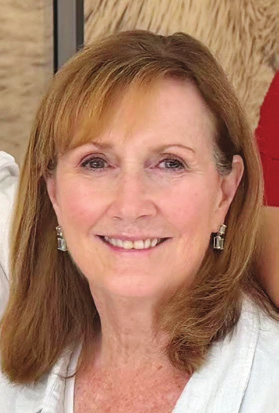
“Doctors have said the more active she is, the better it is for her,” said Alice Osborne, Underwood’s grandmother and head volleyball coach at ERHS. “It sounds like a contradiction because excessive heat usually causes the problem. She wears a heart monitor and we watch that closely.”
It all started last Oct. 2 after the Wildcats finished a volleyball match at Uwharrie Charter Academy. Underwood, then a sophomore, said she had run a mile in school that day and something didn’t seem right.
“My heart rate was high and I really wasn’t going hard,” she said.
That night at UCA, Underwood said the adrenaline helped her get through the match with the Eagles, but something became wrong immediately after.
“After the game, I got really shaky. I got lightheaded and shaky and my blood sugar was high and my heart beat was irregular. It was boom, boom, then it would stop. I waited for two hours in the locker room until I went home.”
It was then that Underwood, whose father has heart difficulties, thought the worse.
“I went straight to, it’s my heart and I could die any second,” she said.
“The next morning they took me to Brenners and I got a heart monitor.”
That set off months and months of doctors appointments and tests with Underwood thinking it was her heart.
“It’s pretty scary, but all my friends and family come around and I try and keep a strong face for my mom because I can see how much it affects her. I just try to be positive,” she said.
After volleyball season, Underwood left ER and remained home for approximately three months, undergoing tests and attending doctors appointments. They still hadn’t received a diagnosis at that point.
“Thankfully, I handle things really well,” Underwood said. “I have handled so much with my dad being in the military and moving around. I take it one step at a time and I knew my family wasn’t going to let something like this happen automatically and they were going to fight.”
Those months at home were difficult.
“This is the toughest thing I have ever been through and probably ever will go through,” Underwood said. “It’s mentally draining and physically draining. My body can’t keep up with other people, but I’m trying to push myself to. There are some days I can’t even get out of bed.
“And then some days I can go play volleyball. It goes day by day.”
While at home, Underwood spent a great deal of time at Duke Hospital.
“I was passing out every day, going to Duke and that’s a long drive,” Underwood said. “My medication helps a little. It will get better for a while where I may pass out once every two days and then I’ll go through a hard part where I can’t get out of bed for a week straight.”
Thanks to a plethora of medicines prescribed by Duke Hospital — Underwood said she takes as many as 12 pills a day — she was able to return to school and participated on the varsity softball team last spring. But she would need help. Her classmates and teammates looked after her every minute she was in school.
“I don’t think I could make it if I didn’t have them,” Underwood said. “It’s crazy to see how they have adjusted to me. They all take care of me. They watch me through class. If I put my head down, they start, ‘Vivian, are you awake?’ because they are afraid I passed out. They are very supportive.”
Three of those friends who take it upon themselves to watch Underwood throughout the day are junior volleyball teammates Gracie McNeill, Jersey Jones and Leah McLeod. Underwood is taking two in-room classes and two online courses.
“We’ve had situations that have been worse than others,” McNeill said. “It always goes through my mind, is this something normal and she is going to be okay, will it be over in a couple of minutes? Or is this something where she is going to have to go to the hospital and stay home for a couple of days to recover? Most of the time, she is alright. We give her ice, prop her head up, lift her legs and whenever she’s conscious and ready, she’ll be back in there.”
Jones, who also plays softball with Underwood, said there are students who are still unaware of Underwood’s condition.
“Last year, when she came back, kids were scared of what happened,” Jones said of one particular episode in class. “They were really scared and we told them she would be fine and just get (Assistant Principal Laura Overman, who is also Underwood’s aunt). They’d be screaming.”
Jones said she has also seen Underwood pass out on the softball field.
“It was heartbreaking to see her fall down in the middle of the game,” Jones said.
McLeod admitted at first it was very frightening.
“At first it was really scary because we didn’t get taught what to do in the moment when she first came back,” McLeod said. “But since we all play volleyball and other sports together, we learned what to and what not to do and how to cope with it.”
What Underwood is going through and the courage she possesses has not gone unnoticed by her teammates.
“I think she’s a role model and a leader,” McNeill said. “She goes through every game and every practice and tries her hardest. She shows us what it is to step up to challenges and play through them. She has definitely taught me to be thankful and grateful for my everyday life because mine will never look like hers. I never know what will happen the next day. She went from not having this to having this in just a few days. It makes me grateful for everything because life can change so quickly.”
Doctors still had no idea what was causing the episodes.
Then one day during travel softball, Underwood’s softball coach, who had experience dealing with a player diagnosed with POTS, said Vivian was experiencing the same symptoms.
Underwood’s mother, father, grandmother and Underwood herself went into full research mode.
“I have done so much research,” Vivian said. “I had no idea what it was. We told the doctors and they said, yes, it could be.”
Osborne said studies have shown there has been a major uptick in POTS cases, especially among children and adolescents, since COVID.
“If you’re diagnosed before the age of 20, you have an 80 percent chance of it resolving, just going away,” Osborne said. “It may take anywhere between two and five years.”
So, even before Underwood gets the official diagnosis, she already knows one thing for sure.
“I have worked way too hard to give up something that I love so much,” she said about her athletic career. “I’d rather have to adjust to save my energy.
“I have to space it out, which is a learning curve. I will not let something like this completely take the game away from me.”
Underwood is the Wildcats’ Libero. There isn’t a time in the match, she admits, when she doesn’t think about her condition.
“I never stop thinking about it because of how scared I am,” she said. “I’m thinking my heart rate is getting too high and they hit it to me and I have to pass it. It’s a constant thing that I try not to let it affect me, but I do a little bit.
“There have been several games where I played one set or tried to play one set and couldn’t finish the set or the rest of the game and my teammates are very accommodating and they step up when they need to.”
Underwood refuses to allow what she is battling to strip her of her high school athletic career.
“It’s given me something to wake up for, to continue to push myself to get out of bed even when I think I can’t,” she said. “I really don’t know if I would be okay mentally if I didn’t have something like sports.
“It has made me take nothing for granted,” Underwood added. “Just simple things like brushing your teeth or getting in the shower. Some days it makes me feel like I’ve run a marathon. Some days, I can’t do it physically. But my family is amazing. They push me, but also surround me, making sure I am good. I push myself more than anyone. I don’t want to give up.”
Courage and inspiration. It can be seen in a lot of different people who are experiencing a lot of different situations.
But courage and inspiration have never been displayed any stronger than what everyone is seeing from Vivian Underwood.